



© 2026 Desert Torah Academy. All Rights Reserved. Website design by Sage Digital Agency
© 2026 Desert Torah Academy. All Rights Reserved. Website design by Sage Digital Agency
© 2026 Desert Torah Academy. All Rights Reserved. Website design by Sage Digital Agency
© 2026 Desert Torah Academy. All Rights Reserved. Website design by Sage Digital Agency
© 2026 Desert Torah Academy. All Rights Reserved. Website design by Sage Digital Agency
From sixth through eighth grade, academic expectations rise and students take greater responsibility for the quality and completion of their work. They move among several teachers, manage different subjects, and begin preparing for the demands of high school.
DTA provides meaningful challenge while keeping students known and connected to their teachers. Greater independence comes with clear expectations, close guidance, and strong relationships. Students are never expected to navigate these years alone.
Our goal is to prepare students for high school and beyond while helping them remain grounded in their relationship with Hashem, Torah values, and the Jewish people.
Assignments require more analysis, planning, and follow-through. Students learn to manage deadlines, study effectively, organize their work, and remain committed when an assignment requires sustained effort.
Teachers remain closely involved. Independence does not mean less guidance. It means students are gradually taught the habits they will need as school becomes more demanding.
General Studies courses deepen students’ work in language arts, mathematics, science, and social studies. Students analyze more demanding material, write with greater sophistication, use evidence, complete long-term assignments, and prepare for high school expectations.
Judaic Studies includes Chumash, Rashi and other meforshim, Mishnah and Gemara, Halachah, Tefillah, Ivrit, and Jewish history. Students learn to prepare text, follow complex ideas, participate seriously in discussion, and consider how Torah guides real choices.
The midday enrichment block rotates throughout the week and may include physical education, financial literacy, artificial intelligence and programming, social-emotional learning, Parshah, and other specialized courses.
Projects ask students to move beyond the textbook. A historical presentation, for example, requires students to understand the people involved, the sequence of events, and why the subject matters before deciding how to communicate it clearly.
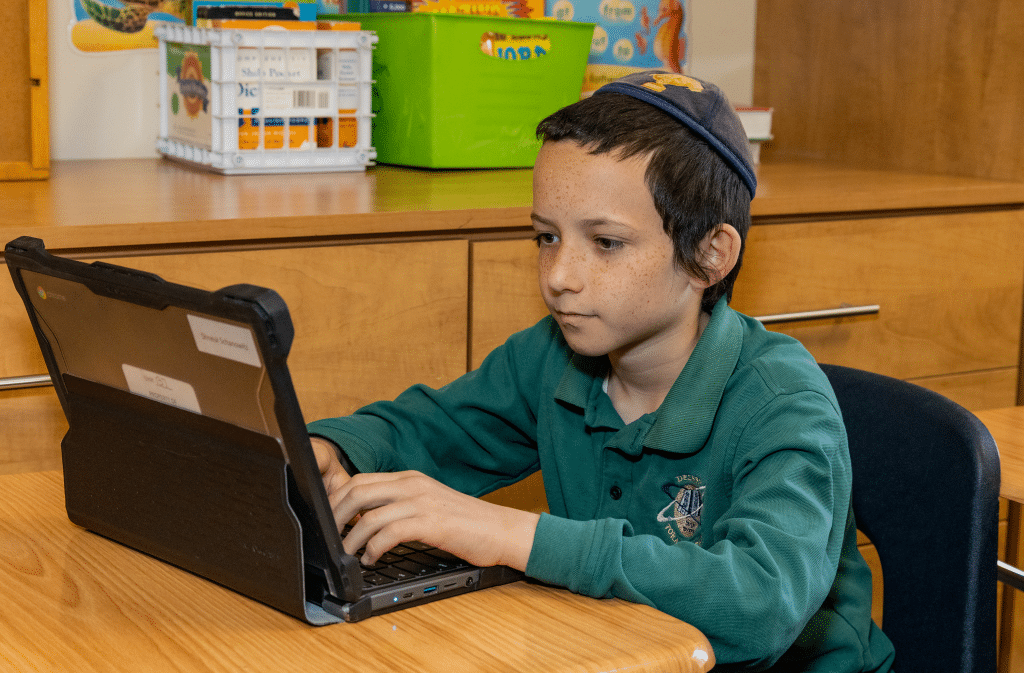
Technology supports learning when it serves a specific purpose. ALEKS allows mathematics students to progress based on individual mastery, while IXL provides targeted practice at school or from home.
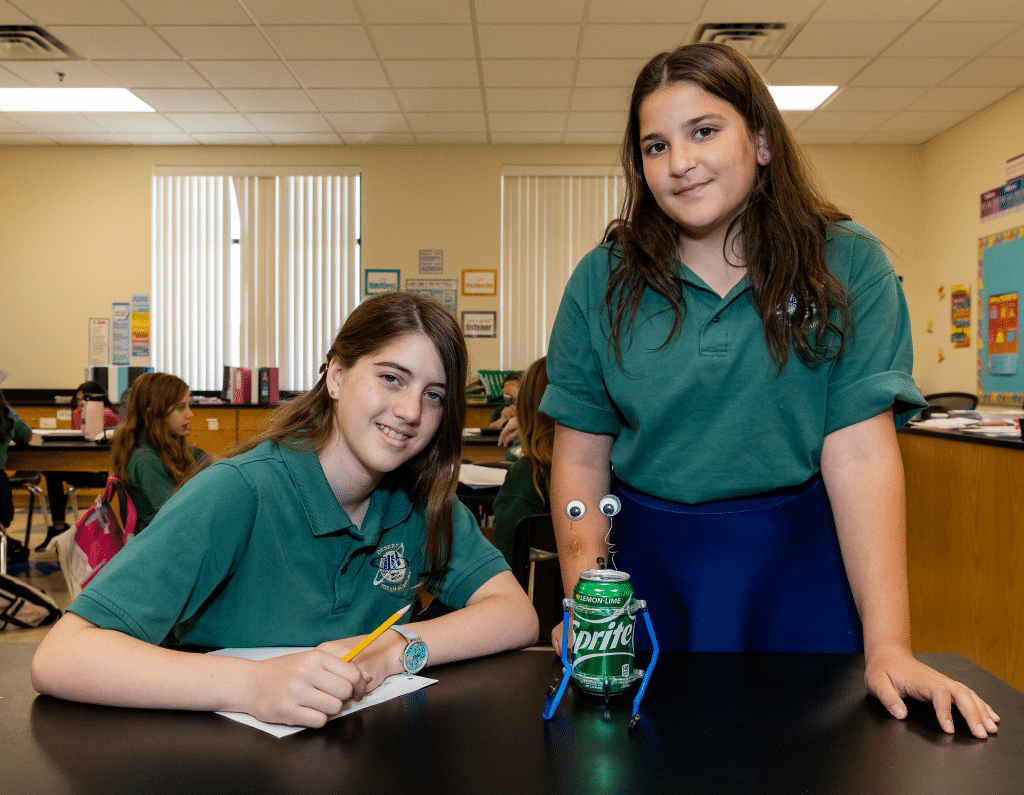
STEM remains part of the middle school experience. Beginning in sixth grade, robotics allows students to work with engineering and programming concepts, test ideas, identify why something failed, and revise their approach.
Financial literacy introduces budgeting, investing, risk, and long-term planning. Students build a sample stock portfolio, follow selected companies throughout the year, and hear from professionals in fields such as real estate, restaurants, and medicine.
Students may also work with artificial intelligence and emerging technologies through age-appropriate programming that emphasizes useful applications, accuracy, and responsible judgment.
Teachers consider classroom performance, completed work, MAP Growth data, DTA assessments, and semester exams. Together, this information shows what a student has mastered and where instruction should go next.
When students need more focused help, classroom teachers can adjust instruction and the Resource Room can provide targeted teaching during an appropriate part of the day. Students ready for advanced material also have room to continue progressing.
Middle school students are learning to make decisions with greater independence and take responsibility when their choices fall short of school expectations. Teachers continue to guide them while asking them to consider how their actions affect others.
As some of DTA’s oldest students, middle schoolers have a visible role in the school community. They are encouraged to lead through example, service, and the responsible use of their strengths.
By the end of eighth grade, students should be prepared for advanced coursework, long-term assignments, exams, and the increased independence of high school. They should know how to work through difficulty and when to seek guidance. Their academic preparation should be matched by a strong connection to Hashem and confidence in who they are.
Meet our faculty, visit our classrooms, and see how DTA prepares students for the next stage of their education.