© 2026 Desert Torah Academy. All Rights Reserved. Website design by Sage Digital Agency
From kindergarten through fifth grade, students build the academic skills and learning habits that will carry them forward. DTA provides a strong foundation in Judaic and General Studies in a warm, orderly environment where children are known well and encouraged to grow.
Teachers recognize the Divine potential within each student. They maintain high expectations and provide the instruction children need to move forward with confidence and perseverance.
Children in the same grade do not always begin with the same skills or progress at the same pace. Differentiated learning groups allow students to receive instruction based on their current understanding. A child ready for advanced material can continue progressing, while another receives focused teaching in skills that still need attention.
Teachers across the elementary grades use a coordinated approach. Students enter each new year familiar with the structure, while groups change as their skills develop. They are never permanent labels or fixed tracks.
This consistency gives students room to advance within a clear academic program.
In General Studies, students move from the foundations of literacy and number sense to reading for meaning, organized writing, more complex mathematics, hands-on science, and deeper work in history and social studies.
In Judaic Studies, students progress from Aleph-Bet, Kriah, tefillah, Parshah, and Chagim to formal Chumash learning from the text. As their skills grow, they are introduced to Rashi, Torah Shebaal Peh, Navi, Halachah, and Ivrit in ways that prepare them for more independent learning.
Each grade builds on the one before it. Teachers know what students have learned and where the curriculum is headed.
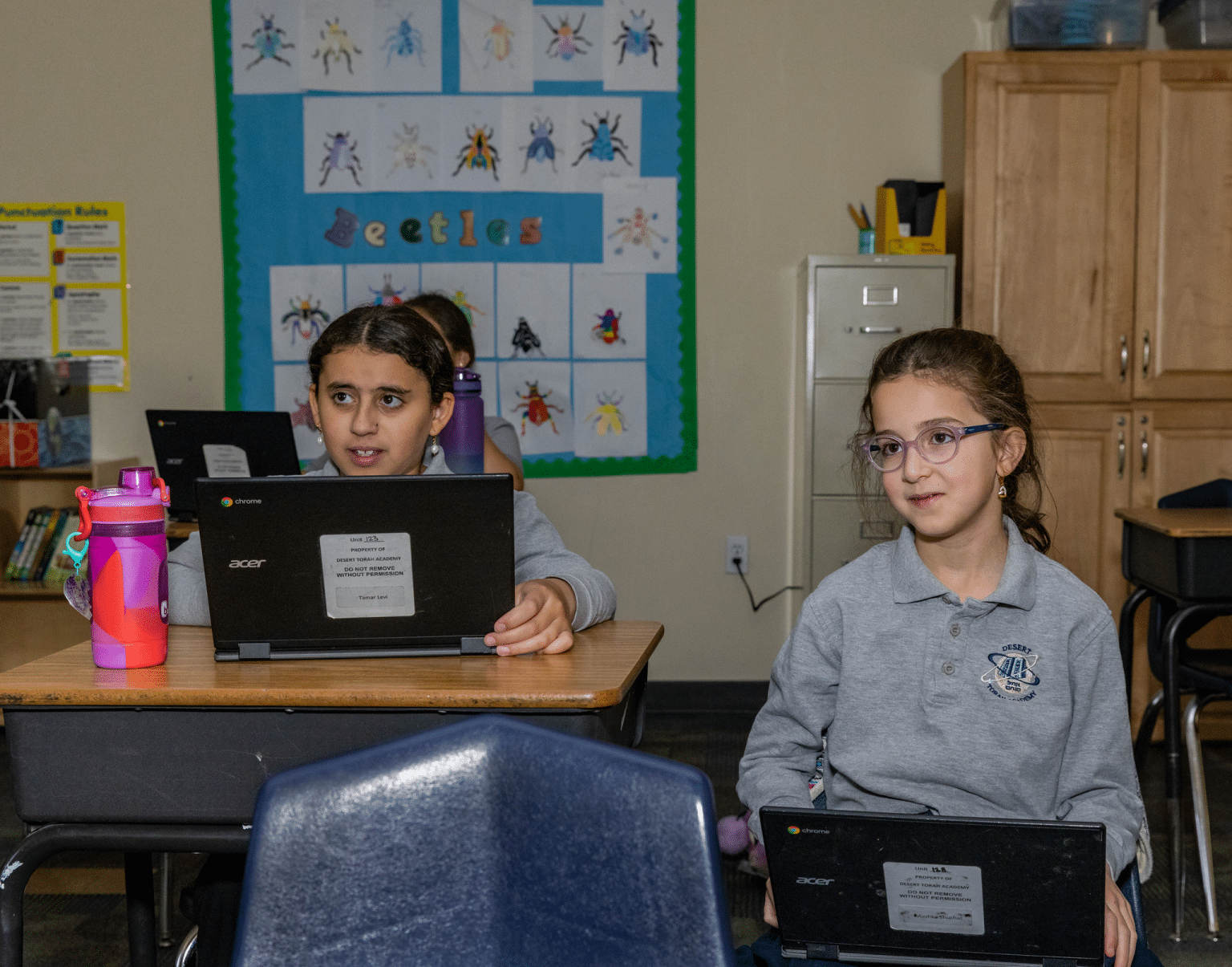
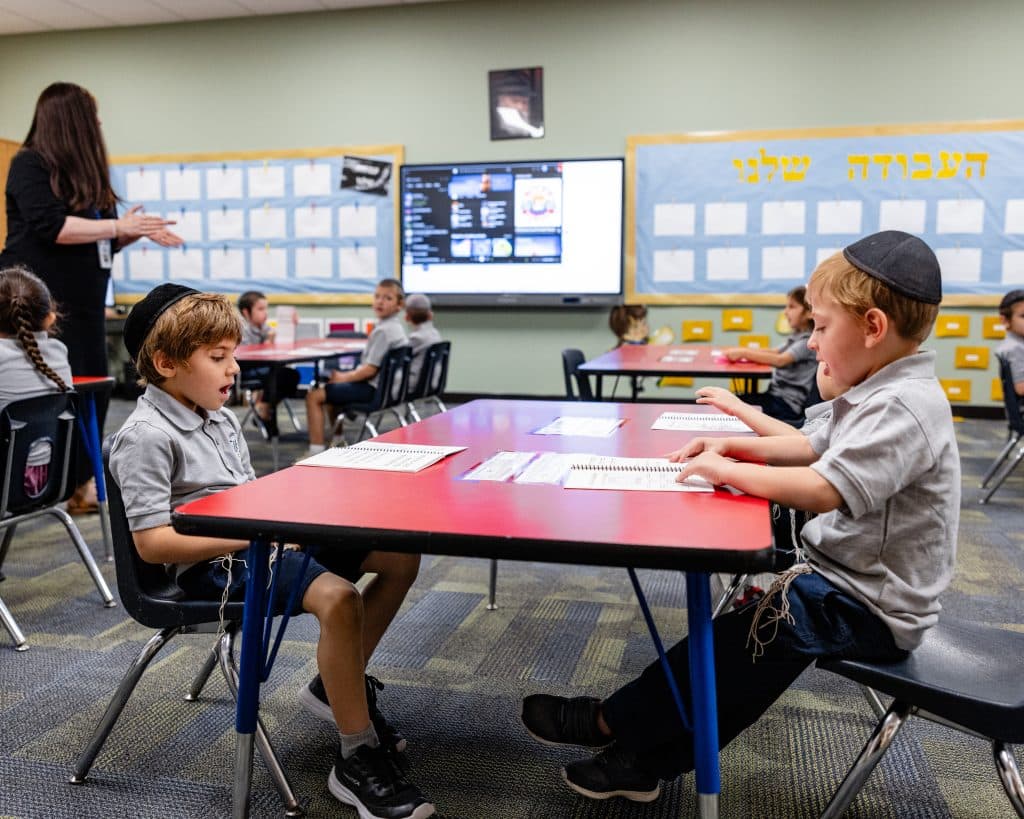
Elementary students learn through clear teaching, consistent practice, class discussion, and experiences that allow them to use what they know.
A Living Museum may invite students to step into history and present the life of an important person. The Nevada project allows students to study their state in depth and share what they have learned. These projects require students to understand the subject, make choices, and produce work that reflects real effort.
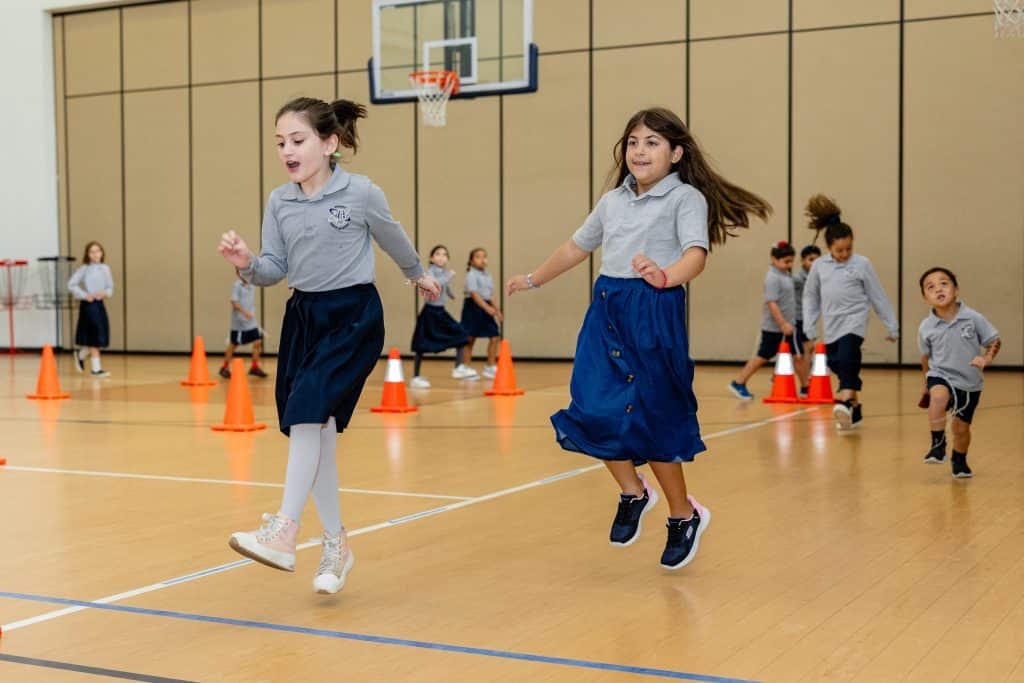
STEM is incorporated throughout the elementary grades through hands-on activities. Art and physical education give students additional ways to develop their abilities.
Students are expected to participate seriously and give their best effort. When a concept requires more time, teachers maintain the expectation while helping the child build the understanding needed to reach it.
Support may take place through differentiated classroom instruction, small-group learning, or targeted Resource Room instruction during an appropriate part of the school day. Support does not lower the standard. It gives the child a better path toward meeting it.
Teachers consider daily work, participation, projects, and formal assessments. MAP Growth provides useful outside data, while DTA assessments show how well students understand and apply the curriculum taught in our classrooms.
Clear routines help children understand what is expected. Students learn to treat others with respect, take responsibility for their choices, and move forward after a mistake.
They also learn what it means to belong to a school community. Their words and actions matter, and the strengths Hashem has given them can be used with purpose.
By the end of fifth grade, students should have a strong academic foundation, confidence in their ability to learn, and the habits needed for the increased expectations of middle school. They should also remain grounded in Torah values and understand that their growth has meaning.
Visit our classrooms, meet our teachers, and see how DTA combines strong academics with an education centered on the whole child.