




© 2026 Desert Torah Academy. All Rights Reserved. Website design by Sage Digital Agency
© 2026 Desert Torah Academy. All Rights Reserved. Website design by Sage Digital Agency
© 2026 Desert Torah Academy. All Rights Reserved. Website design by Sage Digital Agency
© 2026 Desert Torah Academy. All Rights Reserved. Website design by Sage Digital Agency
© 2026 Desert Torah Academy. All Rights Reserved. Website design by Sage Digital Agency
They need to hear an idea, talk about it, touch it, move with it, and meet it again in another part of the day. At Torah Tots, teaching happens during circle time, but it also happens while children build, paint, sort, sing, cook, play, and explore the classroom.
The day includes both teacher-led instruction and time for children to make choices. That balance gives them room to discover while making sure that important skills are taught clearly and consistently.
Children greet their teachers, settle into the room, and choose from the activities that have been prepared for them.
This opening time helps them reconnect with friends and enter the day comfortably.
The class gathers for greetings, songs, tefillah, brachos, the calendar, and the current Judaic theme.
Toddlers may sit for only five to seven minutes. Nursery and Pre-K children can participate for longer periods and take part in fuller discussions.
Teachers introduce letters, numbers, science, Hebrew, holidays, or another part of the curriculum.
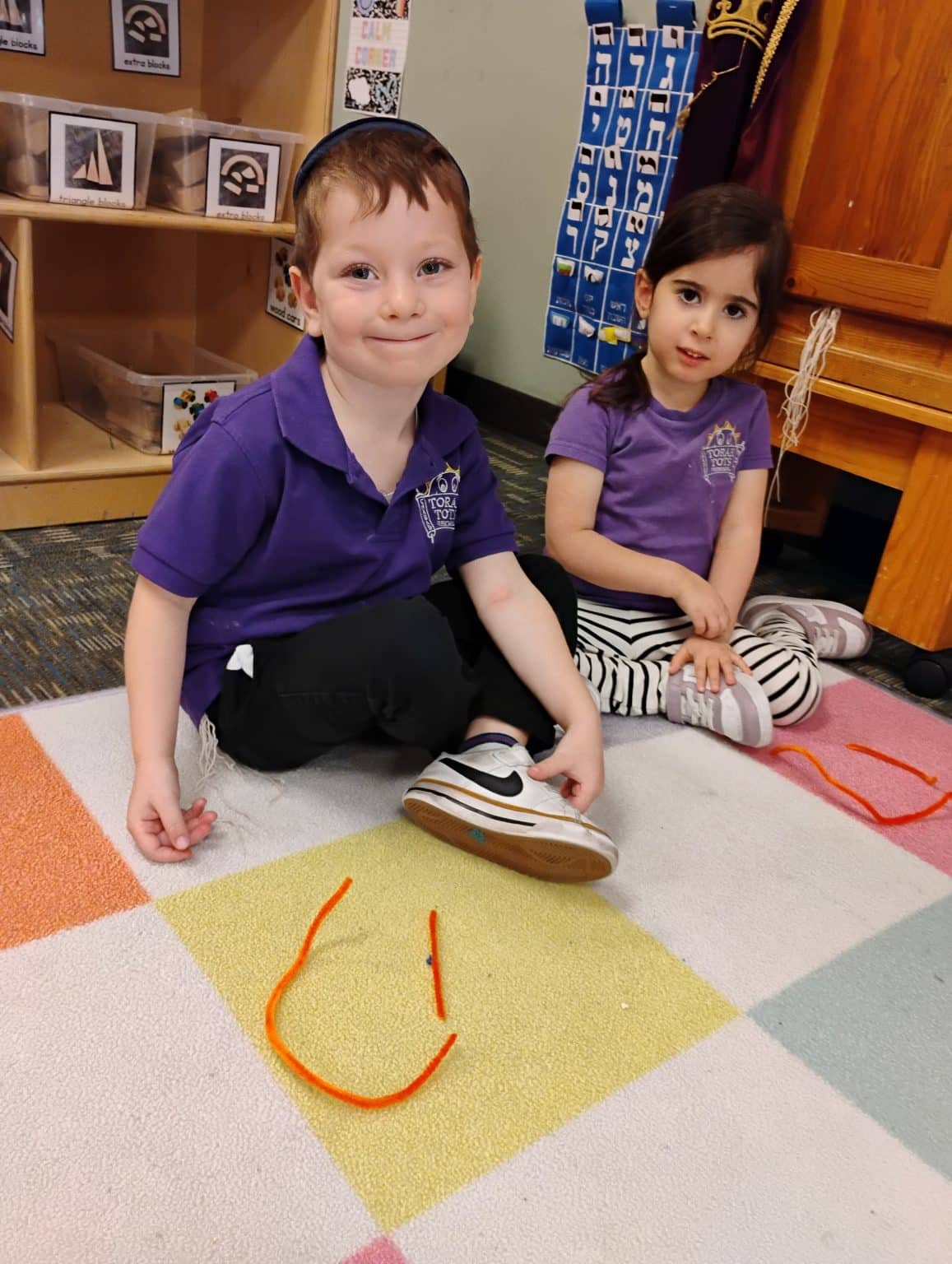
The learning then continues around the room. Children may work with puzzles, books, blocks, dramatic play, art materials, sensory bins, or matching activities connected to the lesson.
Children run, climb, jump, dance, throw balls, and build control over their bodies.
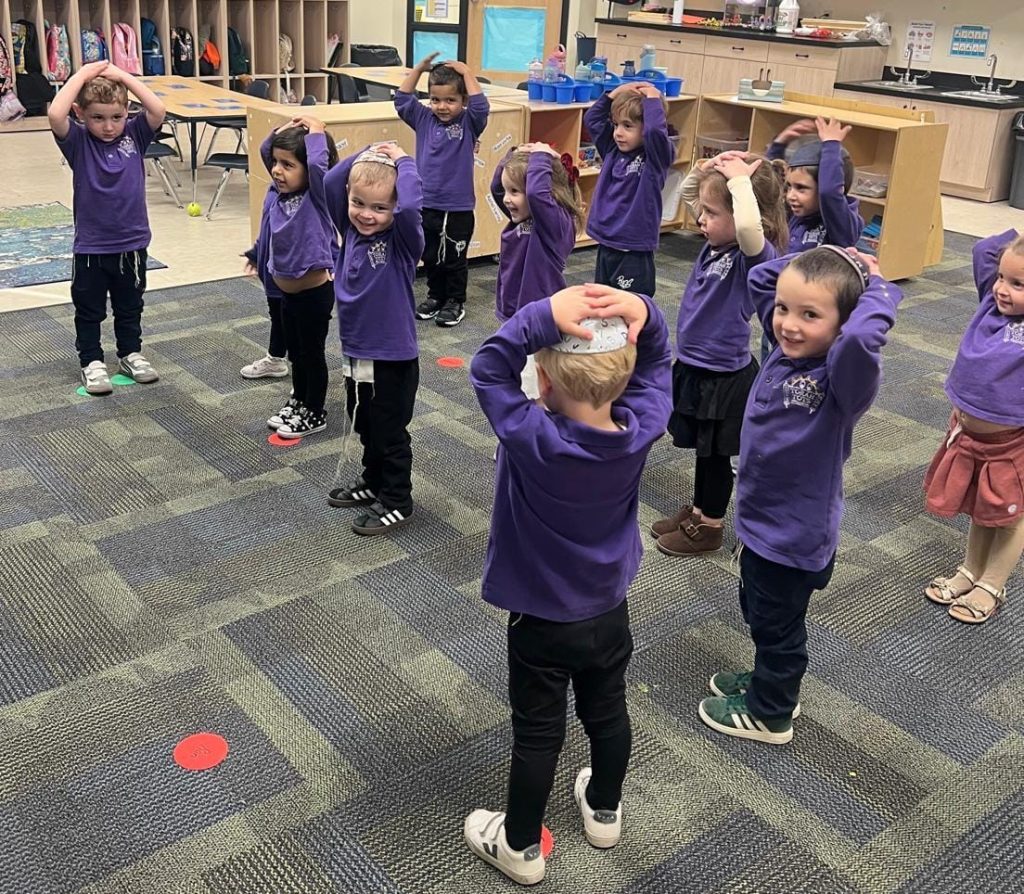
Movement is not limited to one scheduled period. It appears throughout the day, both indoors and outside.
Eating, handwashing, diapering, bathroom use, rest, and cleanup are important parts of early childhood.
Teachers handle these routines with care while gradually helping children do more for themselves.
As children get older, they gather for a second circle time in the afternoon. This circle often focuses more directly on General Studies. Teachers may return to letters, numbers, language, or another academic idea that the children encountered earlier through play and classroom activities.
The second meeting helps bring the day’s learning together.
Play gives children a reason to use what they are learning.
A child building with blocks has to plan, adjust, and solve problems. Dramatic play creates opportunities for conversation and cooperation. Puzzles and manipulatives build concentration. Art strengthens hand control while allowing children to make their own choices.
Teachers remain part of the process. They introduce new language, ask questions, and help children look more closely at what they are doing.
Learning through play is not an absence of teaching. It is teaching in a form that makes sense to a young child.
Language develops all day through conversation, stories, songs, classroom sharing, and play.
Younger children begin with sounds, vocabulary, and the ABC song. Nursery and Pre-K children move into letter recognition, letter sounds, writing, story comprehension, and the understanding that printed words carry meaning.
By the end of Pre-K, children are working toward recognizing uppercase and lowercase letters, printing their name, following the sequence of a story, and predicting what may happen next.
Children also learn that English is read from left to right, while Hebrew moves from right to left.
Some students begin reading simple words before kindergarten. When they are ready, teachers continue moving them forward.
Math begins with real objects and experiences.
Children count, match, sort, compare, and identify patterns. They work with shapes, puzzles, classroom materials, and calendar activities. They learn to describe what is larger or smaller, taller or shorter, alike or different.
Toddlers begin with counting songs, basic colors, and shapes. As children move through Nursery and Pre-K, they recognize and write numbers, identify them out of sequence, solve simple classroom problems, and work with increasingly advanced number concepts.
The stated readiness goals are a foundation, not a limit. Children who are ready may count much further, work with larger numbers, and take on more advanced activities.
Children learn how to function as part of a classroom.
They practice joining a group, sharing materials, waiting for a turn, and communicating what they need. Teachers help them identify emotions by looking at facial expressions and body language.
When children disagree, teachers guide them toward using words. They learn to express frustration, listen to another child, and work through the situation without becoming physical.
These are the everyday lessons of derech eretz.
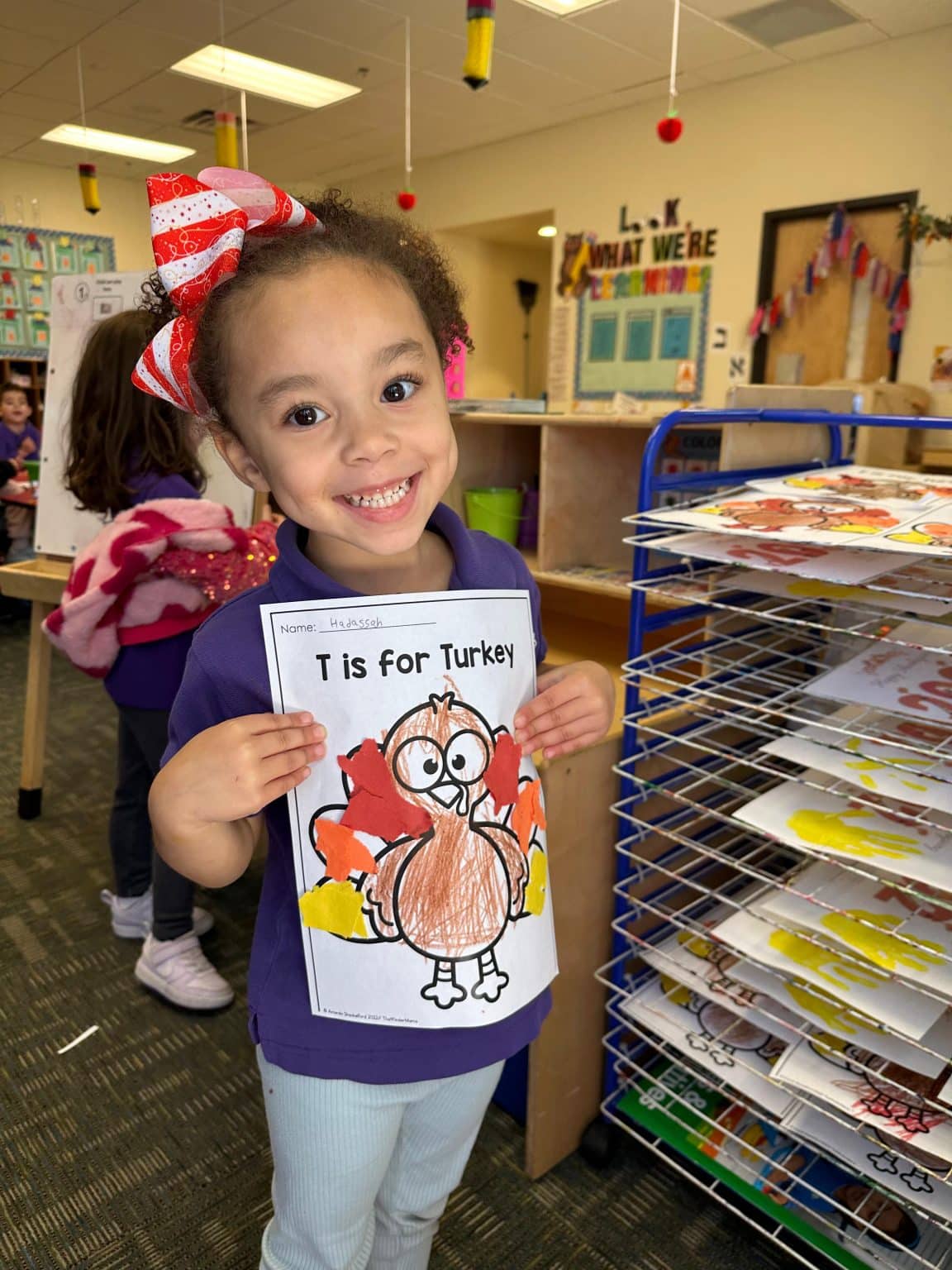
Painting, drawing, cutting, puzzles, sensory materials, and small classroom objects strengthen the hands and fingers.
As children grow, they learn to hold crayons and pencils with greater control, use scissors safely, cut along a line, and coordinate what they see with the movement of their hands.
These skills prepare them for writing and independent classroom work.
Children develop balance and coordination through running, jumping, hopping, galloping, climbing, throwing, and catching.
Music and movement give them another way to use and understand their bodies. Over time, they become more confident navigating the classroom, playground, and gym.
Children gradually take a larger role in caring for themselves and their classroom.
They choose activities, follow directions, clean up, move between parts of the day, and participate in group routines. Older children work on dressing themselves, putting on their shoes, and managing their belongings with less adult help.
These habits help children enter kindergarten ready for the school day.
By the end of Pre-K, children have worked across many connected areas.
They have developed early reading and math skills, greater control over their bodies, stronger communication, and more independence. They can listen to a story, take part in a conversation, follow classroom routines, and work through ordinary social situations.
Those are the foundational goals. They are not the maximum children can achieve.
Many Torah Tots students move beyond them. The teacher’s role is to recognize where each child is holding and make sure that the work continues to challenge them.
Before the school year ends, Pre-K children visit the DTA kindergarten classrooms.
Their teachers also meet with the kindergarten team to share where each child is holding academically, socially, and developmentally. This gives the new teacher a clearer starting point and helps the child enter kindergarten with confidence.