Judaic Studies


Learning Torah With Skill and Meaning
Judaic Studies gives students the knowledge and skills to build a lasting relationship with Torah. The earliest years begin with Hebrew letters, familiar tefillot, Parshah, and the Jewish calendar. As students mature, they work directly with original texts, strengthen their language skills, and learn to ask thoughtful questions.
Students are expected to understand what they learn and explain it clearly. They are also encouraged to recognize how Torah speaks to their lives. By graduation, we want students to feel comfortable opening a sefer and beginning to learn.

A Curriculum That Grows With the Student
Kindergarten Through Second Grade
Students build comfort, joy, and essential skills. They learn Aleph-Bet and Kriah, participate in tefillah through song, and become familiar with the siddur. Parshah and Chagim are taught through stories, projects, and classroom experiences. As students become ready, formal Chumash learning begins with navigating a pasuk, recognizing common shorashim, and translating basic words and phrases.
Grades Three Through Five
Chumash instruction places greater emphasis on translation, grammar, comprehension, and supporting answers from the text. Students learn Rashi script and begin identifying the question Rashi addresses. Mishnah and Gemara introduce Torah Shebaal Peh, new vocabulary, and a different form of reasoning. Work in Halachah, Navi, Tefillah, Ivrit, Parshah, and Chagim also becomes more advanced.
Middle School
Students work with longer texts and more advanced ideas. Chumash includes Rashi and other meforshim. Gemara requires students to follow the movement of a sugya and understand how its questions and answers connect. Chavrusa learning teaches careful preparation, listening, and clear reasoning. Teachers also create room for serious discussion about Emunah, mitzvos, identity, and responsibility.
Hebrew Reading and Ivrit
Kriah develops from letter recognition and decoding to accurate, fluent reading. As students advance, they read script, Rashi script, tefillah, and selected texts without nekudot.
Ivrit is taught as a living language. Younger students learn through song, conversation, movement, and multisensory activities. Older students speak and write with greater independence, complete projects, and learn about the geography and culture of Eretz Yisrael. Middle school students use Hebrew in longer conversations and written work.
Chumash, Rashi, and Meforshim
Students learn to navigate the text, recognize common shorashim, translate accurately, and understand how grammar affects meaning. They should be able to explain what happened, identify the central idea, and support an answer from the words of the pasuk.
As students grow, they work with Rashi and other meforshim, learning how a commentary responds to a question in the text. They also consider the choices made by people in the Torah and what those choices can teach them.
Mishnah and Gemara
Students begin with Mishnah and become familiar with its language and organization. In Gemara, they learn to recognize statements, questions, answers, proofs, and conclusions, while building a working vocabulary of recurring concepts and expressions.
The back-and-forth of a sugya teaches students to examine an idea and reconsider their understanding when new information is introduced. Chavrusa study gives them regular practice in listening and responding thoughtfully.
Tefillah
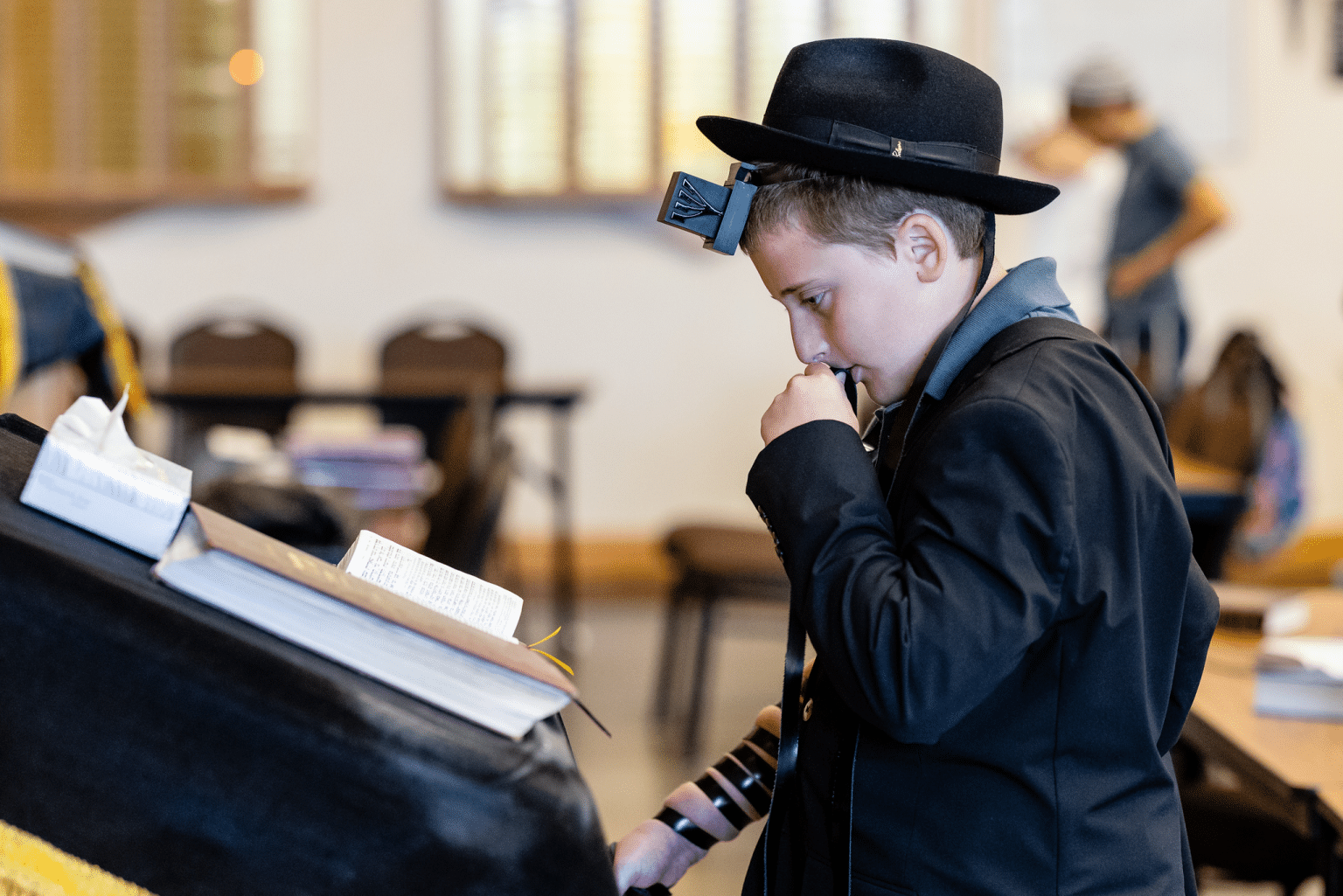
Young students daven through song and learn how to participate appropriately. As their reading develops, they use a siddur, add new sections, and build greater fluency. Students also study the meaning and structure of selected tefillot. In middle school, they develop the ability to participate in tefillah b’tzibur and lead when appropriate.
The goal is for tefillah to become a personal time for gratitude, reflection, and connection to Hashem.
Halachah and Jewish Living
Younger students learn familiar mitzvos and practices through concrete examples. As they grow, they work with sources, compare situations, and explain how a halachic conclusion is reached. Students should know what Jewish practice requires and understand how Halachah guides daily choices.
Parshah and Chagim
Students connect to the weekly and yearly rhythm of Jewish life. Young children learn central stories and practices through discussion and classroom experiences. Older students return to these subjects with greater depth, work with sources, analyze cause and effect, and consider the ideas behind Jewish observance.
Navi and Jewish History
Navi develops textual skills while asking students to think about leadership, consequence, faith, and responsibility. Students use maps and timelines, work with meforshim, and examine how the choices of leaders affect the Jewish people.
Jewish history becomes a distinct subject in middle school. Students study the end of the Second Beis Hamikdash era, later Jewish communities, the European experience, and the Holocaust. They organize events chronologically, use sources, and place Jewish history within the larger events of each period.

Chassidus, Hashkafah, and Personal Growth
Chassidus and Hashkafah give students language to think seriously about their relationship with Hashem and their place in the Jewish people. As students enter middle school, teachers guide honest discussion about Emunah, mitzvos, identity, and the challenges they may face as they grow. Serious questions deserve serious attention.
Middos in the Classroom
Character development is woven into Judaic learning. Chumash examines choices and consequences. Gemara teaches patience and careful listening. Halachah develops responsibility. Tefillah encourages gratitude and humility.
Students are expected to treat others with derech eretz, take responsibility after a mistake, persevere through demanding work, and use their strengths to help others. Torah learning should be visible in the way a student lives.
What Students Carry Forward
By graduation, students should feel comfortable opening a sefer, working through unfamiliar material, explaining what they have learned, and participating meaningfully in Jewish life. Most importantly, we want them to continue learning because Torah has become an enduring part of their lives.
Visit our classrooms and see how students build the skills and connection needed for a lifetime of Torah learning.